
Achilles Tendon Pain During Sports: How to Stay in Motion
Stabbing heel pain while running, a painful start on the football pitch, or a pulling sensation below the calf while cycling: Achilles tendon pain in sport usually flares up under high mechanical load.
The immediate reaction of many athletes is to stop training entirely. However, managing an irritated Achilles tendon rarely demands a complete pause. What you need is smart dosage of load. Precise adjustments to your technique and gear determine whether you can adapt your training and safely stay in the game.
Everyday activities with Achilles tendon pain
FALKE Achilles: Additional support for Achilles pain caused by sport
FALKE Achilles can be used as additional support in all three sports, provided low-cut sports shoes are worn. 3D silicone elements next to the tendon provide gentle stimuli during movement, while compression zones around the ankle create a stable wearing sensation. The elements sit above the shoe collar, which makes them easier to wear in running, football and cycling shoes. The product can make sessions feel subjectively more comfortable; it does not replace diagnosis or training principles and does not make healing promises.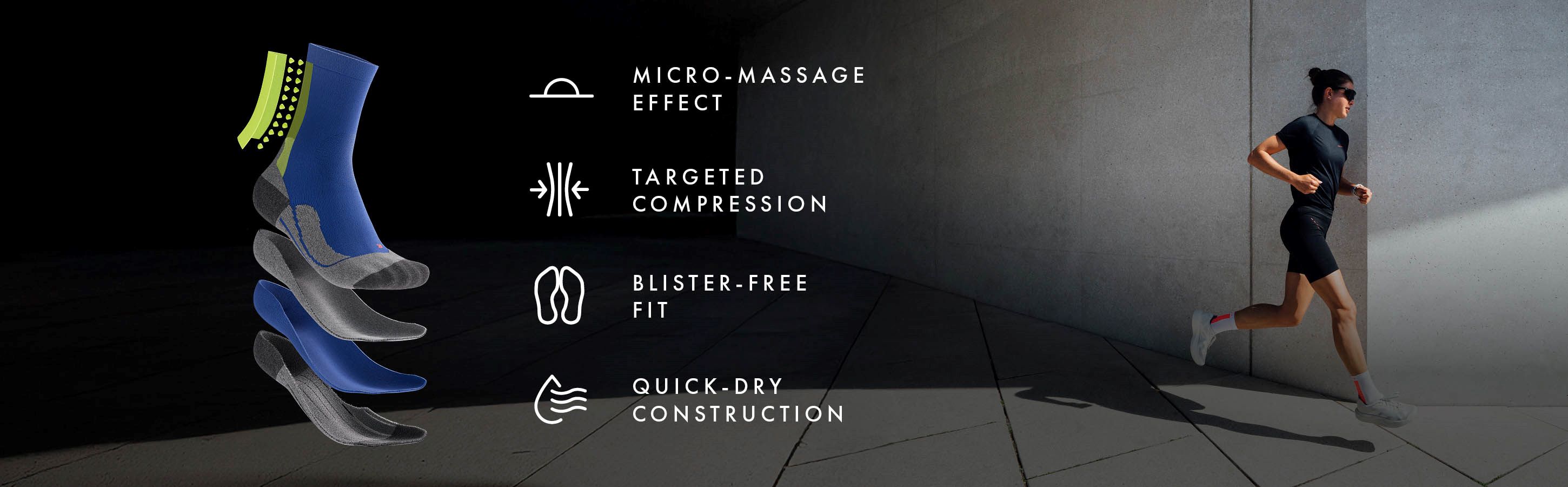
Shared guideline for returning to sport
The load is suitable when it is well tolerated during the session and within 24 hours afterwards. It is better to increase regularly in small steps than to do too much too rarely. Sudden severe pain, an audible “pop” or loss of strength, such as not being able to stand on your toes, should be checked by a doctor.
For detailed background on symptoms and causes, see “Achilles tendon – recognising and understanding pain”. The detailed training structure is described in “Achilles tendon – therapy & structured rebuilding”.